Booking AI Systems & Custom Programming in Florida
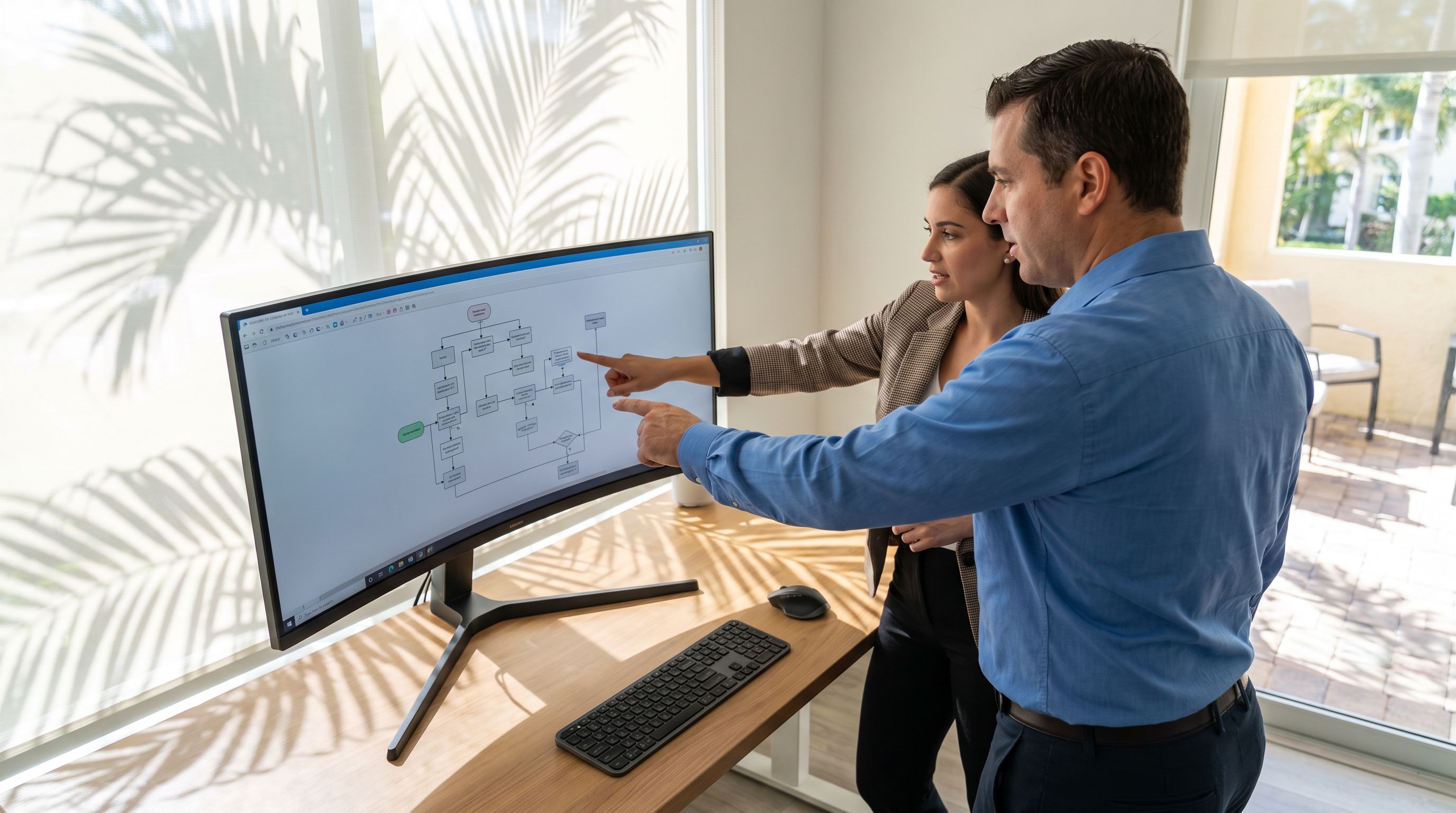
Before you book AI systems and custom programming work in Florida, settle four things in writing: the business outcome you are buying, who owns the code and the data when it ships, how the build connects to the tools you already run, and who maintains it six months from now. Most disappointing AI projects trace back to one of those four being left vague at the kickoff call. Here is what to confirm, what to ask, and which pitches to walk away from.
- Bring a measurable business problem, not a request for "AI" - the brief decides the budget.
- Get code ownership, data handling and account access in writing before work starts.
- Ask what happens after launch: who fixes it, who updates it, how changes are requested.
- Treat "AI files will get you into AI search" as a red flag - Google documents that it ignores them.
- Expect scoping before numbers; a serious quote follows a discovery conversation, not a price list.
Define the outcome before you define the build
The clearest briefs name something countable: missed after-hours calls, quotes that take two days to send, a dispatcher copying addresses between three systems, a service team answering the same five questions by hand. That is a scope a developer can price and test against.
Vague briefs cost more and deliver less. "We want to use AI" leaves the vendor guessing, and you end up paying for their guess. Write one sentence describing what should be true when the project is done, and what number proves it.
Five things to settle before you sign
Run every Florida provider through the same short list, and get the answers in the proposal rather than in an email thread:
- Scope and milestones. What ships first, what ships later, and what is explicitly excluded.
- Integrations. Which CRM, booking tool, phone system or payment platform it must talk to, and whether those tools actually expose an API for it.
- Ownership. Who holds the code, the repository, the hosting and any accounts created during the build.
- Data handling. What customer data moves through the system, where it is stored, and which third-party models or services see it.
- Support after launch. Bug fixes versus new features, response expectations, and how you request a change in month six.
Ownership of code, data and accounts
This is the question most buyers forget until they want to change providers. Custom software is only an asset if you can take it with you.
Confirm three specifics: that you own the source code on final payment, that the repository and hosting live in accounts under your name or are transferable to them, and that any API keys and third-party subscriptions are registered to your business. Also ask what documentation you receive - a build nobody else can read is a build you cannot leave.
How scoping and budget conversations usually work
Custom programming is rarely sold off a price list, and that is normal. In this trade, work is typically scoped one of two ways: a fixed scope for a defined deliverable with clear boundaries, or an ongoing arrangement when the system needs continuous iteration and monitoring.
Cost is driven by the number of integrations, how messy the existing data is, how much review or human approval the workflow needs, and how much ongoing maintenance the system will demand. A provider who quotes a firm number before understanding those four inputs is guessing, and you will pay for the guess later as change orders.
Red flags to watch for in AI pitches
The AI category attracts packaging more than engineering. Be cautious when you hear any of these:
- "We will add an AI file so Google's AI finds you." Google Search Central documentation states that Google Search does not use files such as llms.txt, and that no special machine-readable or Markdown files are needed to appear in Search or its generative AI features. The same documentation points to foundational SEO and unique, people-first content instead. That is the ground real answer engine optimization work stands on.
- No discovery step. A proposal written before anyone has looked at your systems is a template.
- Demo-only proof. Ask to see how a system behaves with bad input, not just the polished happy path.
- Silence on maintenance. Integrations and models change; a build with no upkeep plan degrades.
What "local" should actually get you in Florida
Being able to sit down together matters when a project touches how your team works day to day. Cyticx has worked in digital marketing since 2005 and serves clients across Florida, including Coconut Creek, Fort Lauderdale, Boca Raton, Pompano Beach, Coral Springs and Miami - which means scoping conversations happen in your timezone, during your business hours.
Local also means context. A team that already builds ecommerce website development projects and runs lead generation for Florida service businesses understands what your intake process has to handle in season. On credentials, ask what a provider actually holds rather than what it implies; ours are Google Ads certifications and Google Partner status.
Next step: book a scoping call
Come with the one sentence describing the outcome you want and a list of the systems it has to touch. We will tell you whether it is a sensible first build, what it depends on, and what the honest sequence looks like.
Book a strategy call with Cyticx to scope your project, or read more about our AI programming services before you reach out.
Frequently Asked Questions
Ask five things: what exactly ships in the first milestone, which of your existing tools it must integrate with, who owns the code and accounts at the end, how your customer data is stored and which third-party services touch it, and who supports the system after launch.
That depends entirely on your agreement, so confirm it before work starts. Reasonable terms give you the source code on final payment, repositories and hosting in accounts you control or can take over, and API keys and subscriptions registered to your business.
Because the cost drivers are not visible yet. The number of integrations, the condition of your existing data, how much human review the workflow needs and the ongoing maintenance load all change the scope. A firm number before discovery usually returns later as change orders.
No. Google Search Central documentation states that Google Search does not use files such as llms.txt, and that no special machine-readable files are required to appear in Search or its generative AI features. Foundational SEO and unique, people-first content are what count.
Cyticx serves clients across Florida, including Coconut Creek, Fort Lauderdale, Boca Raton, Pompano Beach, Coral Springs and Miami. Scoping and project calls run during Florida business hours, which keeps feedback cycles short on custom build work.
Have a question about this? Call (954) 621-2381 or get in touch.