Google Ads for Plumbers: What to Know First
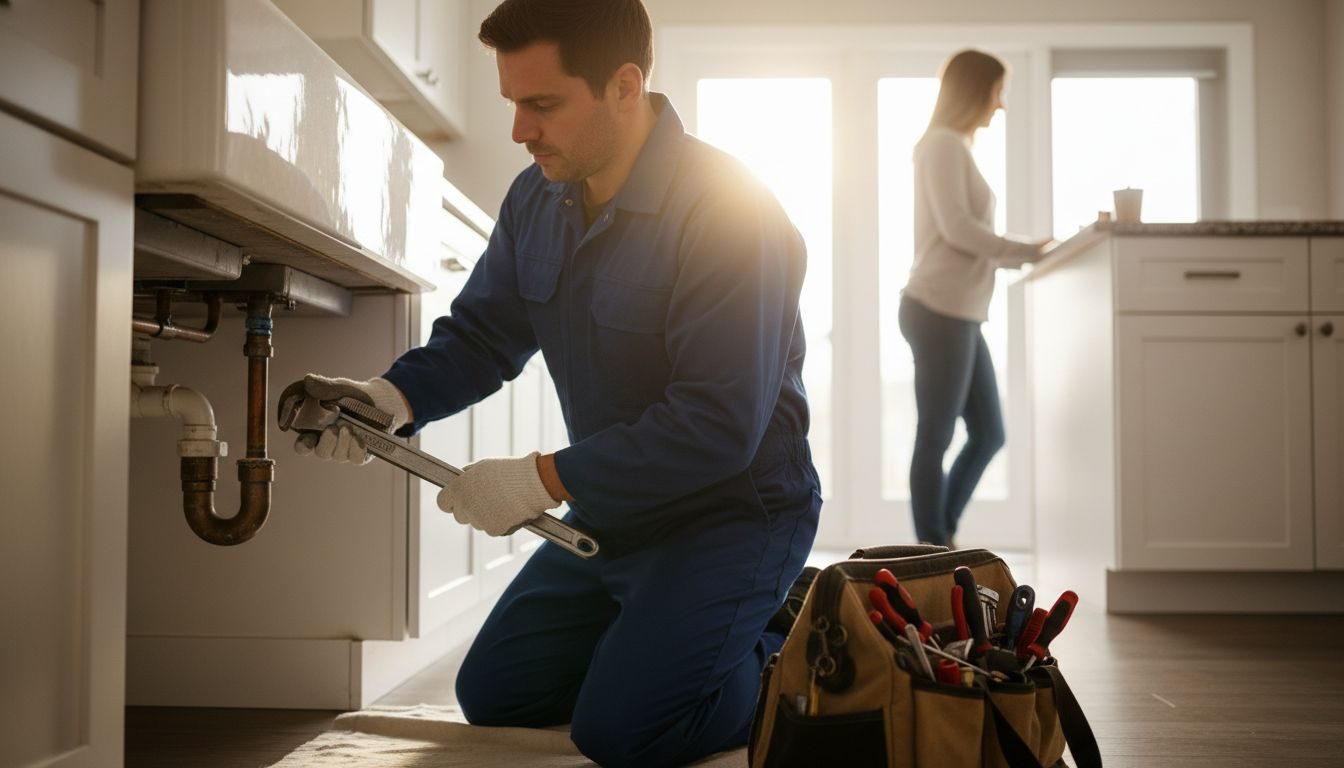
Here is the short answer: Google Ads works for plumbers because plumbing is an emergency-driven service - someone with a burst pipe searches, clicks, and calls within minutes. But the same urgency that makes the channel profitable also makes it easy to waste money. The things that actually decide whether plumbing ads win or lose are narrow: matching emergency intent instead of research intent, blocking the wrong searches with negatives, tracking phone calls as conversions, and sending clicks to a page built to make someone dial. Get those four right and the rest is tuning.
- Plumbing leads arrive by phone, so call tracking is the single most important setup step - not form fills.
- Emergency keywords ("burst pipe", "water heater leaking") convert far better than research keywords ("how to fix a drain").
- Negative keywords protect the budget from DIY searches, job seekers, parts shoppers and out-of-area clicks.
- Tight service-area targeting beats broad radius targeting in a dense metro like Fort Lauderdale or Miami.
- The landing page has to load fast and put the phone number in reach - a slow page wastes the click you already paid for.
Why Plumbing Is a Different Kind of Google Ads Account
Most industries sell to people who are still comparing. Plumbing often sells to people standing in water. That changes almost every setting in the account.
An emergency searcher does not read three pages of content or fill out a "request a quote" form. They tap the first credible number they see. So the account is not judged on clicks or even form submissions - it is judged on how many qualified phone calls it produced.
That also means timing matters. A plumbing account that only runs during business hours misses the 11 p.m. water heater failures. If the business genuinely answers after hours, the ads should be live then too. If nobody answers, spending there just buys missed calls.
Search Intent: The Split That Decides Your Budget
Plumbing searches fall into two very different buckets, and mixing them in one campaign is one of the most common ways money disappears.
- Emergency and hire-now intent - "emergency plumber near me", "burst pipe repair", "water heater leaking", "sewer backup", "no hot water". High cost per click, high close rate.
- Research and DIY intent - "how to unclog a drain", "why is my water pressure low", "water heater cost". Cheap clicks, almost no calls.
- Planned-project intent - "repipe a house", "tankless water heater installation". Slower to close, higher ticket, worth a separate campaign with its own budget.
Each bucket deserves its own campaign or at minimum its own ad group, because the ad copy, the bid, and the landing page should all be different. An emergency ad promises fast response. A repipe ad promises a proper estimate.
The Negative Keyword List Plumbers Always Need
Broad match will pull in traffic that looks related but never converts. A plumbing account should start with negatives already in place, not add them after the damage.
- DIY and information - how to, DIY, tutorial, YouTube, video, fix it yourself
- Jobs and training - jobs, hiring, salary, apprentice, school, license, certification
- Parts and shopping - Home Depot, Lowes, parts, supply, wholesale, buy, Amazon
- Wrong trade - HVAC, septic pumping, pool, irrigation, appliance repair, roofing
- Free and cheap - free, cheapest, price list, DIY kit
- Out of area - city and state names you do not serve
Keep the negatives in shared lists so every campaign inherits them. It is far easier to maintain one list than to patch the same term into six campaigns.
Location Targeting in a Dense Metro
In South Florida, a simple radius does not match how a plumbing business actually dispatches. A ten mile circle drawn around a shop in Fort Lauderdale can cover water, a toll route, or a neighborhood the truck realistically cannot reach in time.
Target the cities and ZIP codes you truly service - Fort Lauderdale, Miami, Boca Raton, Coral Springs, Pompano Beach, Coconut Creek - rather than a blanket radius. Then set location targeting to presence, not "presence or interest", so you are not paying for someone in another state reading about plumbers in Miami.
Bid by area, not just by keyword
Some cities in a service area convert better than others. Once you have call data, adjust bids by location. It is common for the nearest two or three cities to carry most of the profitable calls simply because response time is better there.
Tracking: If You Cannot Count Calls, You Are Guessing
This is where most plumbing accounts fail quietly. The ads run, the clicks arrive, the phone rings - and nobody can tell Google which clicks caused which calls. Without that, automated bidding has nothing to optimize toward.
At minimum a plumbing account needs:
- Call-from-ad conversions for taps on the call extension
- Website call tracking so calls placed from the landing page are attributed back to the click
- Form submissions as a secondary conversion, tracked separately from calls
- A call-length threshold so a 12 second wrong number is not counted as a lead
Once real conversion data is flowing, smart bidding becomes useful instead of dangerous. Before that, it is optimizing toward noise.
The Landing Page Is Part of the Ad
A plumbing click is expensive. Sending it to a slow homepage with a menu, a slider, and a contact form buried at the bottom wastes it.
A page built for plumbing ads keeps it simple: the service and city in the headline, the phone number visible without scrolling, a short trust section, and a fast load on mobile. Most plumbing clicks are mobile, often on a bad connection, from someone who is already stressed.
The message should also match the ad. If the ad says "emergency drain clearing", the page should say that too - not a general "plumbing services" page. Mismatch costs both conversions and Quality Score.
What to Expect in the First 90 Days
Plumbing accounts rarely look good in week one. The first phase is data collection: which terms convert, which cities pull, which hours produce calls that turn into jobs.
A sensible sequence looks like this:
- Weeks 1-2 - tight keyword list, exact and phrase match, manual or maximize clicks bidding, heavy negative work
- Weeks 3-6 - conversion data builds, pause dead keywords, split winning terms into their own ad groups
- Weeks 7-12 - move to conversion-based bidding, add location and schedule adjustments, test a second landing page
Patience in this window is what separates accounts that eventually run profitably from accounts that get shut off in month two.
Get a Second Opinion on Your Plumbing Account
Cyticx manages Google Ads for local service businesses across Fort Lauderdale, Miami, Boca Raton, Coral Springs, Pompano Beach and Coconut Creek, and pairs it with the landing pages and tracking that make the spend measurable. If your plumbing ads are producing clicks but not calls, contact Cyticx and we will look at where the budget is actually going.
Plumbing is not the only emergency-driven trade where these rules apply - if you run a pest control business, see Google Ads for Pest Control: What to Know First for how the same intent-matching and call-tracking approach plays out there.
Frequently Asked Questions
There is no single right number - it depends on your service area, how many competitors are bidding, and how many jobs you can realistically take each week. The practical rule is that the budget has to be large enough to collect conversion data within a reasonable window. A budget so small that it only buys a handful of clicks per day will take months to teach you anything. Start with a budget you can sustain for at least 90 days and concentrate it on emergency keywords rather than spreading it thin across every plumbing term.
They do different jobs. Google Ads turns on immediately and can capture emergency searches from day one, which suits plumbing well. Local SEO builds slowly but keeps producing calls without paying per click. Most plumbing businesses do best running ads for the urgent, high-value searches while building organic and map visibility underneath. Cyticx offers both Google Ads Management and Local SEO for that reason.
Usually one of four things: the keywords are pulling research or DIY searches instead of hire-now searches, the location targeting is reaching people outside your service area, the landing page is slow or hides the phone number, or the calls are actually happening but are not being tracked so they look invisible in the account. Check the search terms report and your call tracking first - those two explain most cases.
Not at the start. Broad match needs a strong negative keyword list and real conversion data to behave well, and a new plumbing account has neither. Begin with exact and phrase match on clear emergency terms, build the negative list from the search terms report, and only test broad match once conversion tracking is reliable and you have enough data for smart bidding to learn from.
You can point ads at your website, but a dedicated landing page almost always performs better for plumbing. A homepage is built for browsing - it has navigation, multiple services, and a general message. A landing page for an emergency plumbing ad has one job: show the matching service, show the phone number immediately, and load fast on mobile. That focus is what turns an expensive click into a call.
Have a question about this? Call (954) 621-2381 or get in touch.